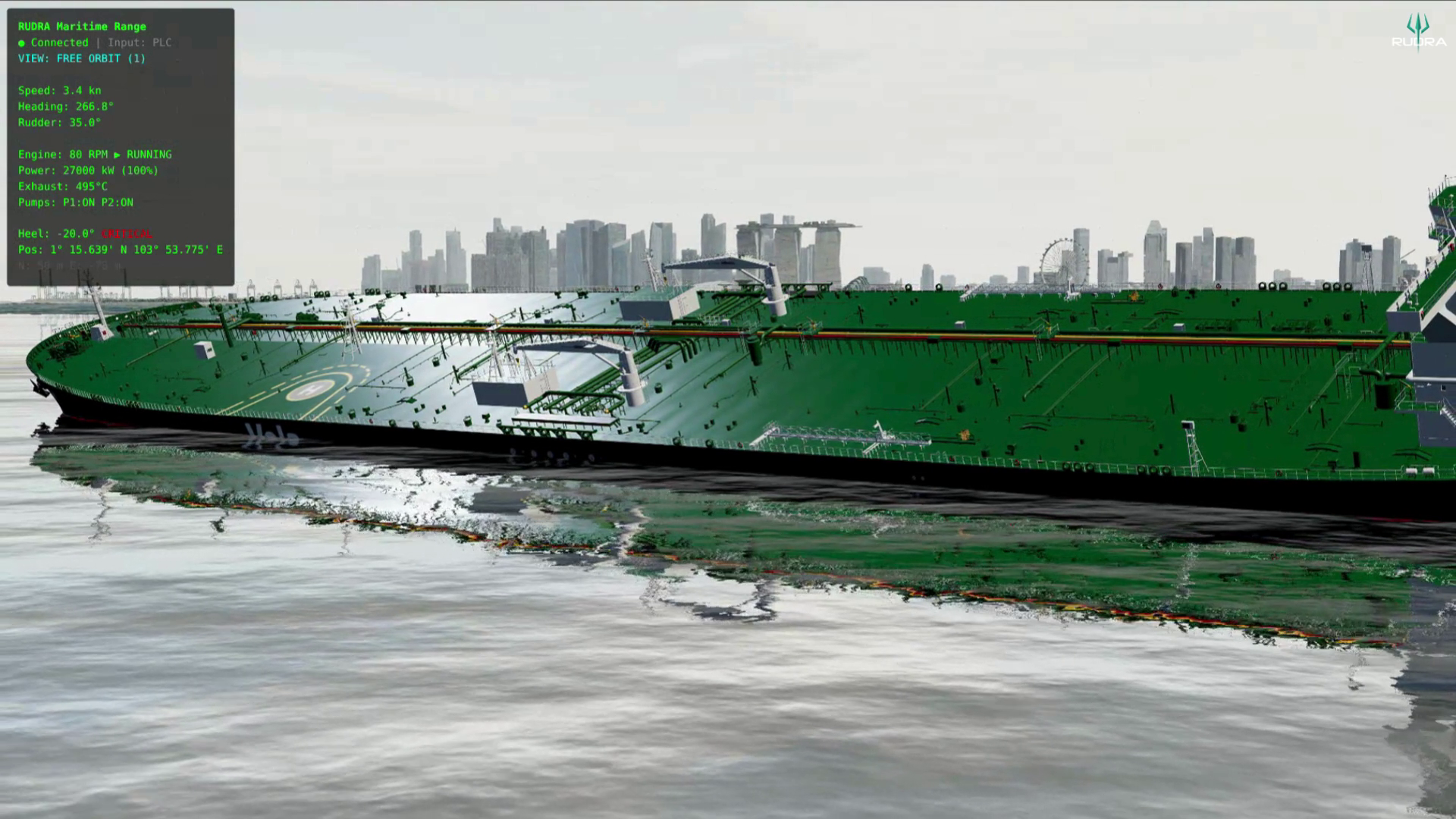
RUDRA MARINE TESTBED
A high-fidelity cybersecurity simulation of maritime shipboard systems for training, certification, and research.
A high-fidelity cybersecurity simulation of maritime shipboard systems for training, certification, and research.
From training technical cyber specialists, to security testing actual maritime computer based systems, the goal of our system is to close the cybersecurity gap in the maritime industry, and empower all stakeholders to fortify their security posture.
We've built this testbed after working with over 1500 vessels, and managing their shipboard networks in production.
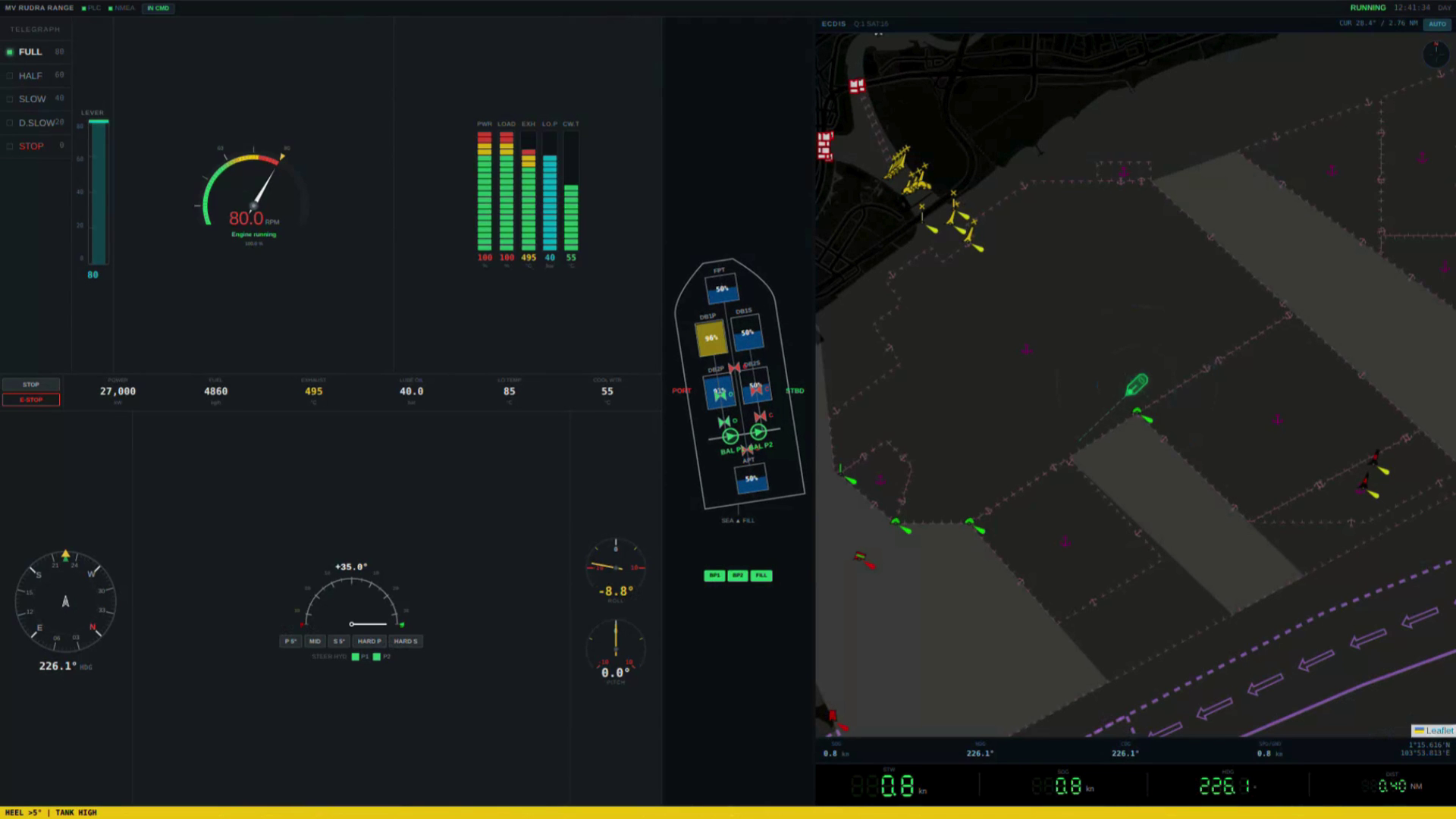
We've replicated the exact behaviour of real vessel control system networks with real protocols, PLCs and NMEA 2000 navigation devices on a CAN bus backbone. The same protocols running on vessels at sea today.
One platform, multiple training and testing scenarios.
Train offensive teams to find gaps in maritime OT networks. Pivot from crew WiFi through routing misconfigurations to reach propulsion and ballast systems.
Train defenders to spot the divergence between what sensors report and what the ship is actually doing. Build cross-check discipline across independent data sources.
Run realistic OT exercises and generate timestamped drill reports for TMSA Element 13, SIRE 2.0, and USCG cyber rule compliance.
Show management and board members the physical consequences of cyber attacks on vessel systems. Move cybersecurity from abstract risk to visible threat.
Connect real bridge equipment via USB-to-CAN. Rehearse pentest engagements against the target’s actual hardware before boarding the vessel.
OEMs and class societies: test maritime devices against IACS E27 requirements in a realistic vessel context. Hardware-in-the-loop via a standard USB adapter.
Develop maritime OT pentest skills. Win contracts you currently lose to maritime specialists. Bill at maritime OT rates within 30 days of deployment.
Run crew cyber drills on your actual bridge equipment types. Satisfy TMSA Element 13, SIRE 2.0, and USCG cyber rule requirements with real evidence.
Test your products against E27 cybersecurity requirements before class submission. Catch firmware vulnerabilities in development, not during type approval review.
Train surveyors at scale on a standardized platform. Validate E26/E27 assessment procedures against realistic vessel environments.
Connect your real ECDIS, gyrocompass, or autopilot via USB-to-CAN. The device's firmware cannot distinguish the range from a real vessel's CAN bus. The attack effects are genuine.